Wednesday, 1 May 2013

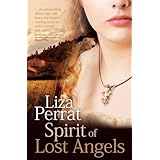
Spirit of Lost Angels by Liza Perrat

Product Details

When I was much younger I read the Scarlet Pimpernel books and fell in love with all things French Revolution. I was pleased when I saw that Spirit of Lost Angels was set in this period of history especially as the story is told from the point of view of the poor and peasant classes. This is a beautifully written and researched novel. The heroine, Victoire Charpentier is a strong and likeable woman and we watch her character develop as she suffers through horrendous circumstances. The story is fiction, but there are cameo appearances by real people of the time which is cleverly done. I felt that I learned something as well as enjoyed the story and as I have written before, that is the test of a good historical novel. I am very happy to recommend it. A real Indie Gem. 

Thursday, 7 March 2013

Ripples in The Sand by Helen Hollick


I was delighted to renew my acquaintance with Captain Jesamiah Acorne and his wife Tiola Oldstagh, the heroes of Helen Hollick's excellent Sea Witch series. In Ripples in the Sand, the fourth novel of the series, the couple return to England for the first time.  Jesamiah is persuaded to take Sea Witch to Spain where he soon finds himself in danger of losing his fidelity, his freedom and mabe even his life. Meanwhile Tiola fights her biggest battle yet with Tethys the sea spirit.  It is set at the time of the Jacobite rebellion and there is a wealth of nautical and historical information which is informative but never detracts from the story. And it is a good story which had me hooked from the first page to the last and of course left me wanting more. I am very happy to recommend it.

I am also very happy that as part of her 2012 blog tour, Helen Hollick agreed to answer a few questions for me.


When writing about a real historical character you have to keep to the facts, but with your own fictional characters you can do anything you like with the plot. Which do you prefer?

Definitely the made-up plots! Having said that, by using real facts the ‘plot’ is already there, dates, times, events if making these up everything has to be thought out. I think I have the best of both worlds with my Sea Witch Voyages, though, because I base the adventure around real events which gives me a foundation to build upon.

In Ripples In The Sand, for instance, the story took hold from the true fact of the 1719 Jacobite Uprising. The Spanish really did organise an armada in an attempt to place James (III as he should have been) on the English throne. History repeated itself from the more famous Elizabethan Armada when a storm destroyed the fleet.

I enjoy slotting Jesamiah Acorne into the reality of what happened – Bring It Close, the third Voyage is a good example. The villain of the story is Blackbeard. We know a lot about his demise because the remainder of his crew were tried (and hanged) in Williamsburg, Virginia, and therefore, there were court records of the trial, plus Naval log books of the battle at the Ocracoke.

In my story, Jesamiah led that raid – but he very clearly states that he did not want his name mentioned. Which is why you do not find him there in any of the records!

Having decided not to have magic in your Arthurian novels, what made you write the Sea Witch novels as fantasy?

I emphatically did not want any magic or supernatural in my Arthurian Trilogy because I set out to write the what might have really happened story – in which case, no knights in armour, no holy grail, no Lancelot or Merlin. Instead, a man who had to fight hard to gain his kingdom, and fight even harder to keep it. For the Sea Witch Voyages, though, I wanted to write a good sailor’s yarn – a nautical adventure that was fun to research and write, and as much fun to read. And let’s face it, most sailor’s yarns are not meant to be believed!

Do you have your future Sea Witch novels planned or does each one lead to the next?
I have a vague plot planned.

For Ripples In The Sand I knew I was going to use the attempted 1719 Jacobite Rebellion, that Tiola was going to ‘travel’ back in time, and I knew the ending (which I will not reveal here). Beyond that, the story unravelled as I wrote it.

For the next Voyage, On The Account, I already know that Jesamiah is going to be accompanied by a mysterious Nightman, called Mahadun, in a search for a highly valuable wooden casket (mentioned in Pirate Code.) There will be misunderstandings, fights, romantic scenes and lots of high-action adventure …. What other secrets Jesamiah intends to reveal to me as I write, I have no idea!

What is next for you after you have finished the Sea Witch series?

I hope to write a couple of books about Madoc the Horseman. The first one is to be called Foals of Epona. They are set during the late 5th Century and will be a spin-off from my Arthurian Trilogy. And one day I must write a follow-up to Harold the King (UK title) I am the Chosen King (US title)

Who are your own favourite novelists?

Elizabeth Chadwick, hands down – her books are so beautifully written and you can rely on her research. I also enjoy Suzanne McLeod’s Spellcrackers.com series, and Dick Francis. I also love finding the gems that are among the indie published Historical Fiction that are sent to me for review (I am the UK editor for the Historical Novel Society)

What would your advice be to anyone who is thinking of publishing with an independent publisher?

Think quality and professionalism.
It is often easy to spot an Indie book because the font and layout is incorrect. The cover is probably created by a relative and looks somewhat amateurish. More often than not there are typos and errors because there has been no professional edit – so if you are going Indie, then do so, but do it properly. Which costs money, but you are investing in yourself – aren’t you worth every penny?

Having said all that, my first Indie published experience broke all those rules (apart from the editing – although even then there were missed typos!) I learnt from my mistakes and now have a trusted editor and a proof reader, a professional graphics designer for the covers and I use a reliable and 100% trustworthy publishing company to produce my books (Silverwood Books UK)

Mind you, there are still typos…. I am convinced that gremlins put them all back in as books go to print!

Monday, 24 December 2012

Finn's Fate by Michael Wills


Finn's Fate is the story of three brothers who, when their homestead is burned, set out on a journey to the land of the Danes in search of adventure and a better life. I enjoyed the fact that we are seeing this part of history from the Viking point of view as we are used to the stereotype of an invading force interested only in rape and pillage. There is, of course a certain amount of violence but Finn and his brothers are very human and we grow to know and like them. The novel is very well researched and detailed. Maybe at times there is too much detail. I did find that in places I was so bogged down with the intricate minutae of shipbuilding or working in a forge that, though interesting it read more like a history book.  I found myself skipping through sections to find out what happened next. That said, the story is compelling and the characters are well drawn. I especially liked the fact that the ending is quite unexpected. Finn's fate therefore, ticked both the boxes for a historical novel. It told a good story and left me better informed.

Tuesday, 20 November 2012

Becoming Lola by Harriet Steel


Becoming Lola is the story of Lola Montez who having been born Eliza Gilbert to a British Family in India in the 1820s went on to become a famous dancer, notorious throughout Europe. She was one of the most famous women of her time. The writing and dialogue are more assured in the first part of the novel than later, but it is clearly very well researched and well presented.This was a difficult review to write because Lola is not a likeable heroine, however, her story is so interesting, especially in its historical context that I was compelled to read on. So much so that when I finished reading the novel I looked up Lola on the web to find out what happened to her next. Hopefully, Harriet Steel has a sequel in the making because Lola's story does not end here.


Friday, 12 October 2012

Hues of Blackness by Rosey Thomas Palmer


Hues of Blackness is a carefully researched history of the Island of Jamaica told through the voices of the female line of one family. We learn about the earliest inhabitants ,the Tainos, the coming of the Spanish and the British and follow the female experience through slavery and independence. I found the novel informative and interesting. It is very intelligently written and is not an easy read but is worth persevering. As the novel covers such a large period of history, we are not able to get to know most of the characters in any depth. Instead, Rosy Thomas Palmer introduces us to Amy, a modern day descendant of the family who, having suffered a stroke, is trapped inside her body and must try to make herself and her wishes understood. Amy's story is interspersed with those of the women from history. I am happy to recommend it.

Friday, 28 September 2012

Cawnpore by Tom Williams


The very best historical fiction involves you in its characters' stories whilst teaching you about the historical background in a non lecturing way. Cawnpore does exactly that. I knew very little about the Indian Mutiny and had not even heard of the siege at Cawnpore so I have learned something while enjoying the story.  The narrator, John Williamson is in a unique position to see the conflict from both sides. This is done very cleverly by the author and the narrative had me hooked from the very first page. The character of the narrator comes through very strongly. He is every inch the formal Englishman and he writes in a very formal unsentimental way, yet we still see the strength of his feelings and the inner turmoil as he is forced to decide where his loyalties lie. There are no flowery descriptive passages, but the scene is set skilfully. As you can probably tell, I really enjoyed this novel. Highly recommended.

Saturday, 1 September 2012

Reef by David Kendrick


Reef is a contemporary novel set in New Zealand where an artificial surfing reef is built in sacred Maori fishing waters. Although this conflict forms the background of the novel, the real stories are that of the four main characters. This is told very well and the characters are beautifully and compassionately drawn, from Gnat the disfigured Maori boy trying to find his place in the world to Shaun, the Marine Biologist, attempting to understand the workings of the female mind. I found that I did care what happened to them. The narrative flows easily and the New Zealand setting is nicely described. I am very happy to recommend another good Indie novel.